
Materials · FORMFOLD ARCHITECTS · 22 October 2026 · 3 min read
Choosing materials is one of the most enjoyable parts of designing a home. Timber, brick, stone and plaster each bring a different character. The environmental question is broader than whether a material looks natural: how much is needed, how it performs and how long it lasts all matter.
Insulation, airtightness and building services influence the energy needed to run a home. Embodied carbon concerns emissions associated with materials and construction over their life cycle. A thoughtful specification considers both, rather than treating one low-carbon product as a complete strategy.
Retaining a sound wall, floor or roof may avoid the need for new materials. Historic England highlights the value of retaining and reusing existing buildings in reducing demand for new construction products. Assess condition and suitability before deciding that replacement is the best route.
The same thinking can apply at a smaller scale: repaired doors, reused bricks or a kitchen that can be adapted. Reuse works best when dimensions, condition and availability are considered early.
“Eco” and “sustainable” are starting points for questions, not specifications. Ask about sourcing, manufacturing, transport and end of life. Where Environmental Product Declarations are available, compare products on an equivalent basis and check that the information matches the intended application.
A material needs to suit its exposure and maintenance requirements. Timber cladding relies on appropriate species, fixings and weathering details. Wet areas need suitable substrates and junctions. Insulation needs to work with the surrounding construction and moisture strategy.
Think about repair and replacement too. Accessible fixings and replaceable components can make future maintenance simpler than an assembly that has to be demolished to reach one failed part.
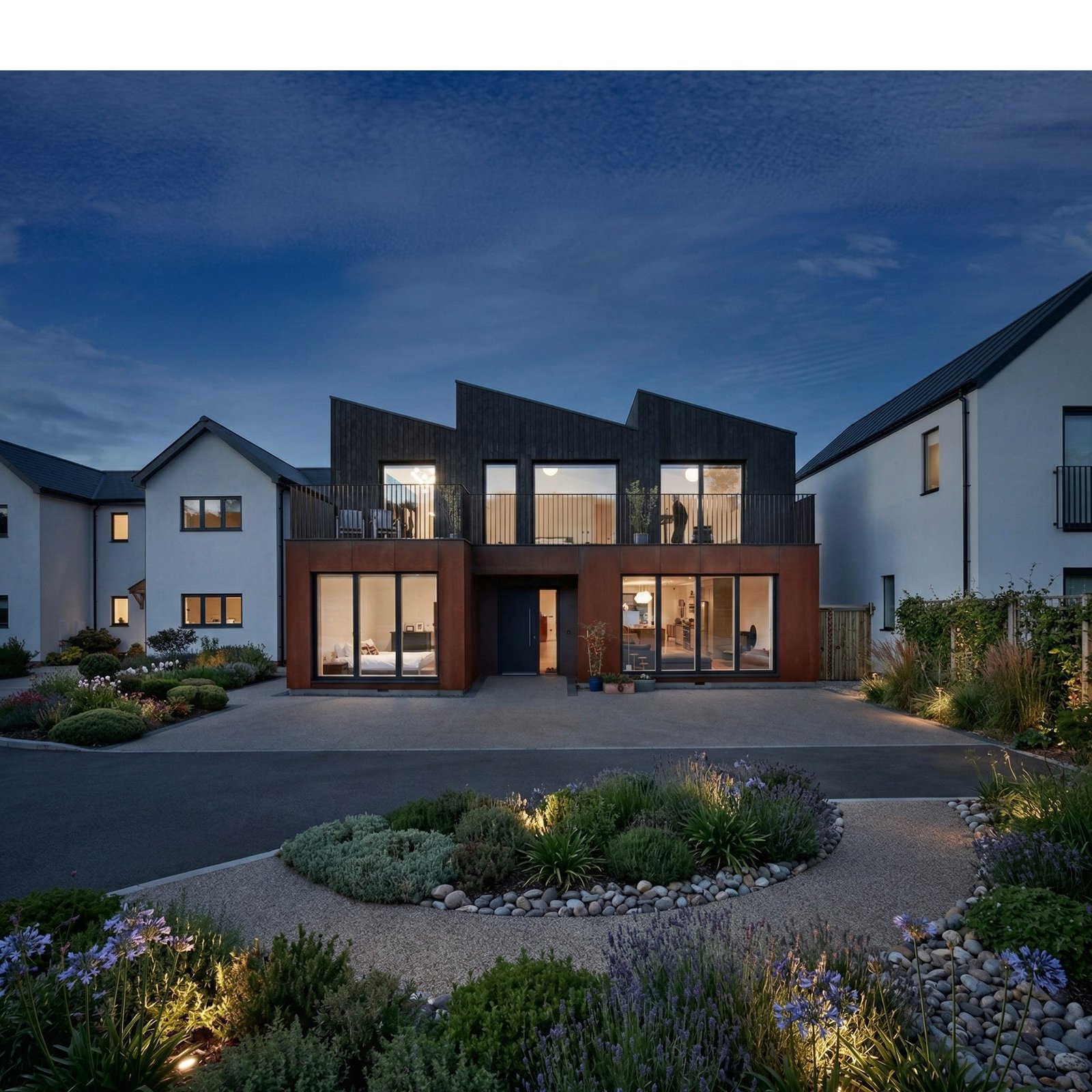
We enjoy materials that give a home texture and identity. Explore the combination of weathered steel and dark timber in the Corten House, then consider what is appropriate for your own site and brief.
Further reading: UK Green Building Council: embodied carbon and Historic England: retaining and reusing buildings.
Thinking about your own project? Get in touch with FORMFOLD to discuss your home, priorities and next steps.